
 MX Channel System
 MX-R Roof Support
 Supports & Suspensions
 Fixings & Anchors
 Pipework Products
 Cable Containment
 Threaded Fasteners
 Screws & Rivets
 View all...
 Design, Engineering & Fabrication
 Fire Resistant Supports


 5 min read
 October 23, 2026

 Back to blog
BS 8519:2020 is the British code of practice for choosing and installing fire-resistant power and control cables for life safety and firefighting. If your channel, trapeze brackets, threaded rod or cable tray carry those cables, the standard expects the supports to hold them in place for as long as the cables have to keep working.
That second part is where most of the difficulty sits. The cable gets chosen for its fire survival time, and the brackets under it often get looked at only when someone asks how they were sized.
Request the FRS guide | Discuss your FRS question
What BS 8519 covers
BS 8519:2020 came into effect on 30 June 2020 and replaced the 2010 edition, which is withdrawn. BSI lists the 2020 edition as current.
It gives recommendations on selecting and installing fire-resistant power and control cable systems that need to keep their circuit integrity for life safety and firefighting, plus recommendations on electrical system design and fire survival times. It is aimed at buildings that, because of their size, height, form or use, need systems such as sprinkler pumps, wet riser pumps, smoke control and firefighting or evacuation lifts.
The standard refers to three categories of circuit, with fire survival times of 30, 60 and 120 minutes. It can also be used where a circuit has to keep working in a fire for business continuity, property protection or environmental reasons.
It does not give recommendations for installations covered by BS 5839-1, BS 5839-8, BS 5839-9 or BS 5266-1, which deal with fire detection and alarm, voice alarm, emergency voice communication and emergency lighting. Those standards carry their own, much shorter line on cable support: methods of support should be non-combustible and should withstand a similar temperature and duration to the cable while still holding it.
Approved Document B points to BS 5839-1, BS 5266-1 and BS 8519 for guidance on cables in large and complex buildings.
Where the supports come into it
BS 8519 sets out to make sure the fire integrity of a circuit is not let down by the other parts of the system, and it names cable support systems alongside glands, terminations and joints. Clause 16 deals with cable support systems. Annex E sets out how to work out the cross-sectional area of drop rods, the threaded rod a trapeze bracket hangs from.
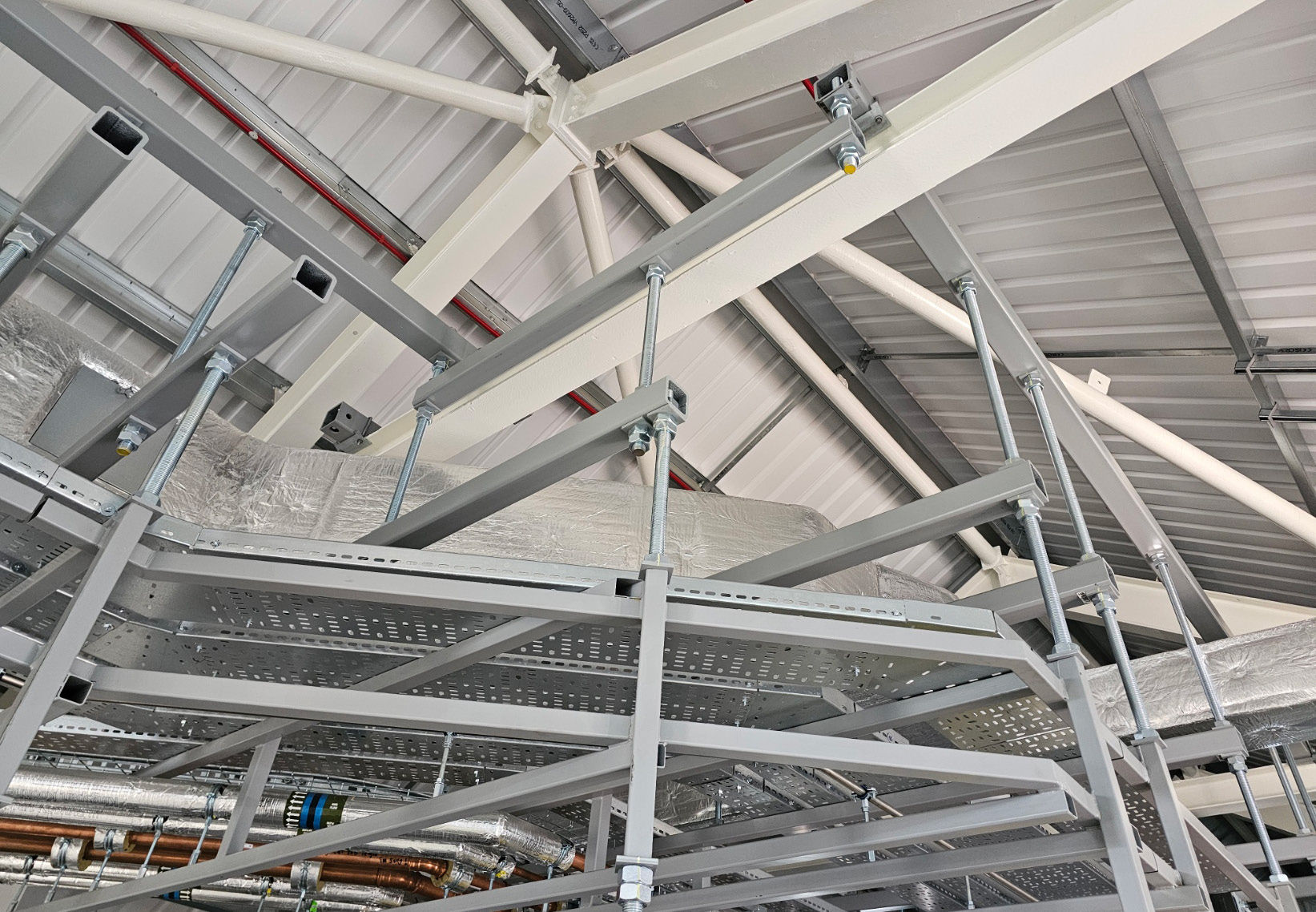
Put simply, a fire-resistant cable on a bracket that gives way early is no longer a working circuit. Our reading of what BS 8519 asks of the support:
- Same survival time as the cable. The support system should last as long as the cables it carries, under the same defined fire conditions.
- Sized for steel in fire. Brackets should be sized for the drop in steel strength in a fire, or shown to carry the loads for the required time on the BS EN 1363-1 fire curve.
- Anchors count as much as the bracket. Choosing the fixing anchors should be treated as just as important as designing the support.
- Fire-resistant routes up top. Where practicable, the fire-resistant cable route should be one of the upper tiers of the high level services. Pipes, ducts, busbars and other cable routes may not be designed to last as long, and if they collapse onto the fire-resistant route they can overload its supports.
- Separate supports. Fire-resistant and non fire-resistant cables should sit on separate support systems, with the fire-resistant one above where they share a route and it is practicable.
- Room to grow. Allow spare capacity in the region of 20% to 30% for future cables, confirmed in the project requirements, and include it when checking the support's load in fire.
BS 8519 is blunt about the result of getting this wrong: premature collapse of the cable support system and circuit failure of the cables on it.
Why "adequately sized" is the hard part
Steel loses its strength rapidly when exposed to fire, falling to just 4% of its original strength after 90 minutes fire duration. Channel is thin-walled and open-sided, so it can deform and buckle badly under load in a fire.
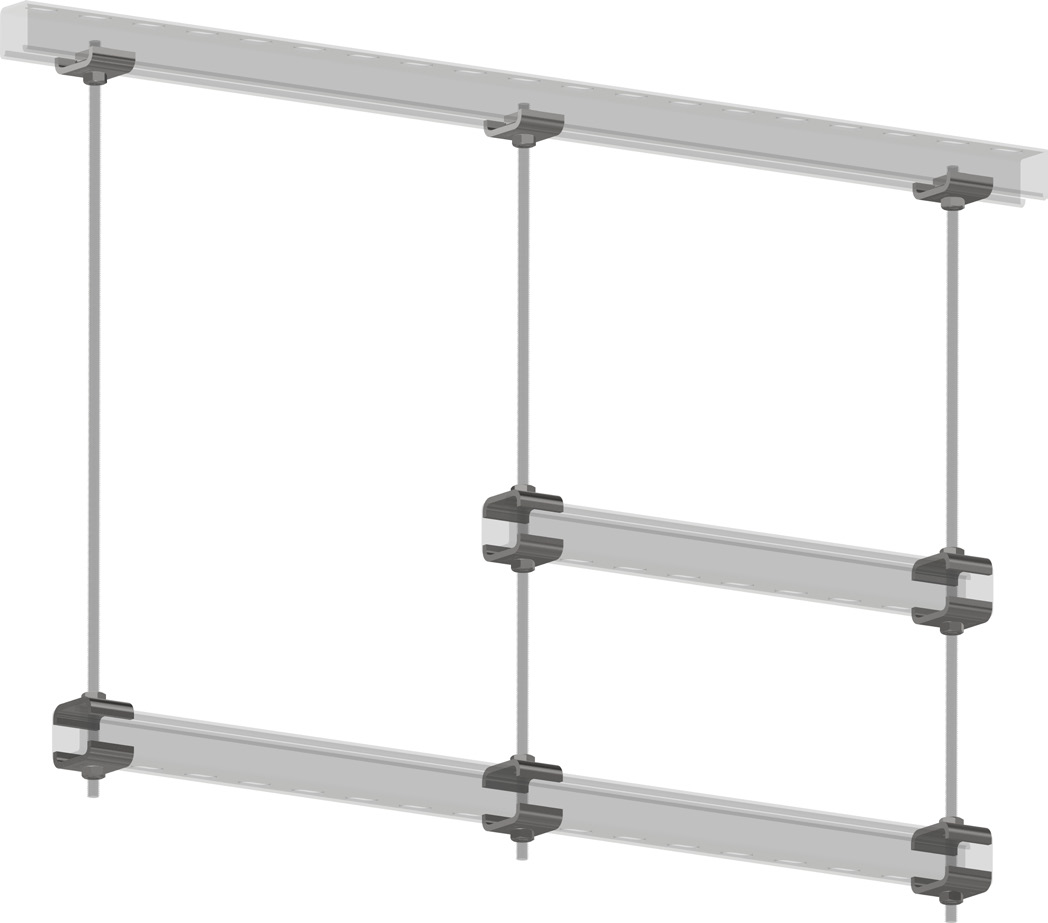
BS 8519 asks for brackets that are adequately sized for this. Apart from the threaded rod calculation in Annex E, it does not say how to show it. That calculation gives a maximum allowable stress for drop rods in fire. It is a useful way to set safe loads for threaded rod where there is no test data, and it is conservative by design, so it tends to come out lower than test results. It does not size the channel bearer, the channel nut connections or the support as a whole.
A reduction factor applied to channel's normal load tables does not fill that gap either. Channel and its connections behave differently from structural steel in a fire, and the figures have to come from testing that matches the application.
How we evidence the support
There is no single answer for every bracket, so we work from the arrangement: the cables and their fire survival time, the load, span and levels, the connections, and what it fixes to.
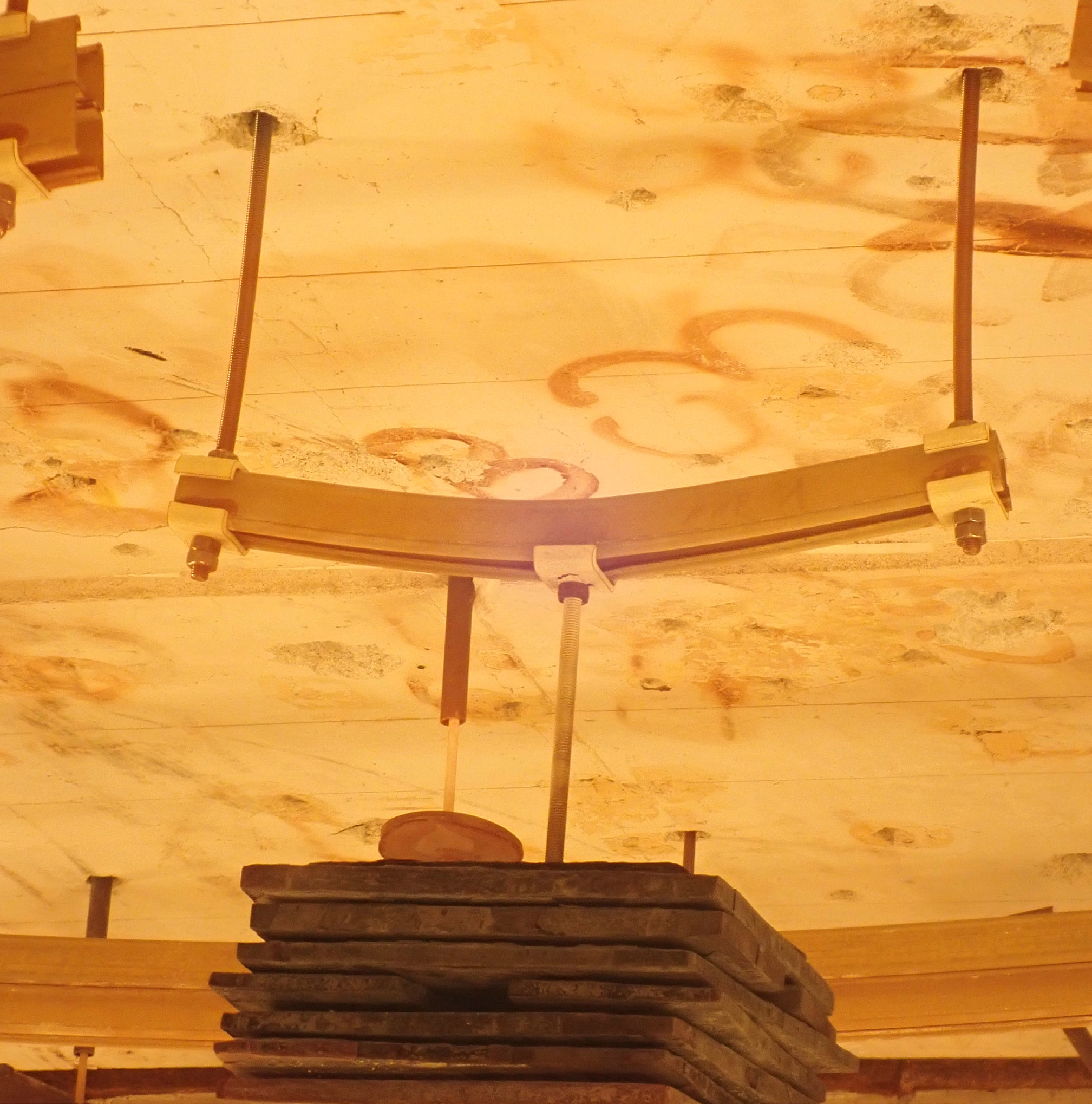
- Channel. For trapeze brackets that sit inside the scope of the testing. EAD 280016-00-0602 is the harmonised technical specification for the fire resistance of building services supports, and the gold standard test method for channel. It tests the components, uses modelling checked against full-scale fire tests, and makes behaviour predictable within the scope of the testing. That gives a way to show a support is adequately sized for its loads and fire duration, which is the question BS 8519 leaves open. Our MX channel route is EAD-tested, so inside that scope we can work through the load, span and deflection for your arrangement.
- Custom steel. For heavier loads, longer spans, frames and service modules beyond what channel can carry in fire. These supports are designed and assessed for fire to the structural steel fire design code, EN 1993-1-2.
- Hybrid. Channel combined with traditional steel, for more capacity than channel alone while keeping channel's easy connections to the services.
Whichever route fits, we set out what was assessed, the basis we used and the limits behind it. Where something sits outside what we can evidence, we will say so.
What helps us help you
- The cables on the route and the fire survival time they need
- Drawings, sketches or photos of the proposed or installed supports
- Loads, spans, centres, levels and connection details
- The substrate or structure it fixes to
- Any test data, calculations or submissions you already have
- Whether you are planning ahead or sorting out something already on site
No model yet? A sketch and a call are enough to start.
For the wider picture, including steel in fire, the main test standards and how the EAD method works, see our Fire Resistant Supports (FRS) page.
Request the FRS guide | Discuss your FRS question
Questions we get about BS 8519
What is BS 8519?
BS 8519:2020 is the British code of practice for selecting and installing fire-resistant power and control cable systems that must keep working in a fire for life safety and firefighting. It is aimed at buildings that need systems such as sprinkler pumps, wet riser pumps, smoke control and firefighting or evacuation lifts.
Is BS 8519:2020 the current version?
Yes. BS 8519:2020 came into effect on 30 June 2020 and replaced BS 8519:2010, which is withdrawn. BSI lists the 2020 edition as current.
Does BS 8519 cover cable supports?
Yes. Clause 16 covers cable support systems and Annex E covers the cross-sectional area of drop rods. The support should last as long as the cables it carries, be sized for the loss of steel strength in fire, and have its anchors chosen with the same care.
Does BS 8519 apply to fire alarm and emergency lighting cables?
No. BS 8519 does not give recommendations for installations covered by BS 5839-1, BS 5839-8, BS 5839-9 or BS 5266-1. Those standards ask for cable supports that are non-combustible and withstand a similar temperature and duration to the cable while still holding it.
Is the BS 8519 threaded rod calculation enough to size a support?
Not on its own. It sets a safe stress for the drop rods in fire and is conservative by design. It does not size the channel bearer, the connections or the support as a whole, so those need test evidence or a structural design.
How do Fire Resistant Supports (FRS) relate to BS 8519?
BS 8519 asks for supports that are adequately sized for fire but gives no method beyond the drop rod calculation. Our FRS work looks at your actual arrangement, using EAD-tested data for our MX channel within its tested scope, or EN 1993-1-2 design for custom steel.