
 MX Channel System
 MX-R Roof Support
 Supports & Suspensions
 Fixings & Anchors
 Pipework Products
 Cable Containment
 Threaded Fasteners
 Screws & Rivets
 View all...
 Design, Engineering & Fabrication
 Fire Resistant Supports


 4 min read
 October 29, 2026

 Back to blog
There is no blanket fire rating that follows one length of strut channel into every bracket, bearer, rod, connection, fixing and service. Check what was tested or designed, and whether it matches the support you are installing.
The same question comes up with pipe supports, cable tray and cable containment. The product name alone does not tell you how the support will perform in a fire. The useful answer comes from the evidence for the assembled support and the conditions it covers.
Is strut channel fire rated?
A length of channel is one part of a support. To carry a service, it may be combined with brackets, channel nuts, threaded rod, connections and fixings. Change the support geometry or connection and the arrangement changes.
A datasheet can describe a product or an element that has been tested. It does not automatically describe every support built from that element. Before using a fire claim in a specification, ask which parts were included, what arrangement was tested, and what fire condition and duration the result covers.
For MIDFIX MX channel, "EAD-tested" applies within the tested scope. It does not cover every configuration made from channel, and it does not describe a separate custom steel design. Check the report and drawing against the support you intend to install.
What about fire-rated pipe supports?
A pipe support may include a bracket, a frame or bearer, a clamp, connections and a fixing to the building. The support design needs to match the pipe arrangement and the stated fire requirement. A phrase such as "fire-rated pipe support" does not say which of those parts were assessed.
Check whether the evidence covers the support that carries the pipe, how that support connects to the structure, and what assumptions apply. The evidence for the pipe itself or the system it serves answers a different design question. Keep the support claim limited to the support and conditions described in the report.
Where the support needs a custom steel frame, MIDFIX assesses its fire resistance using EN 1993-1-2. That calculation route applies to the designed steel support and stated assumptions. It is separate from the tested-scope statement for MX channel.
What about fire-rated cable tray or containment?
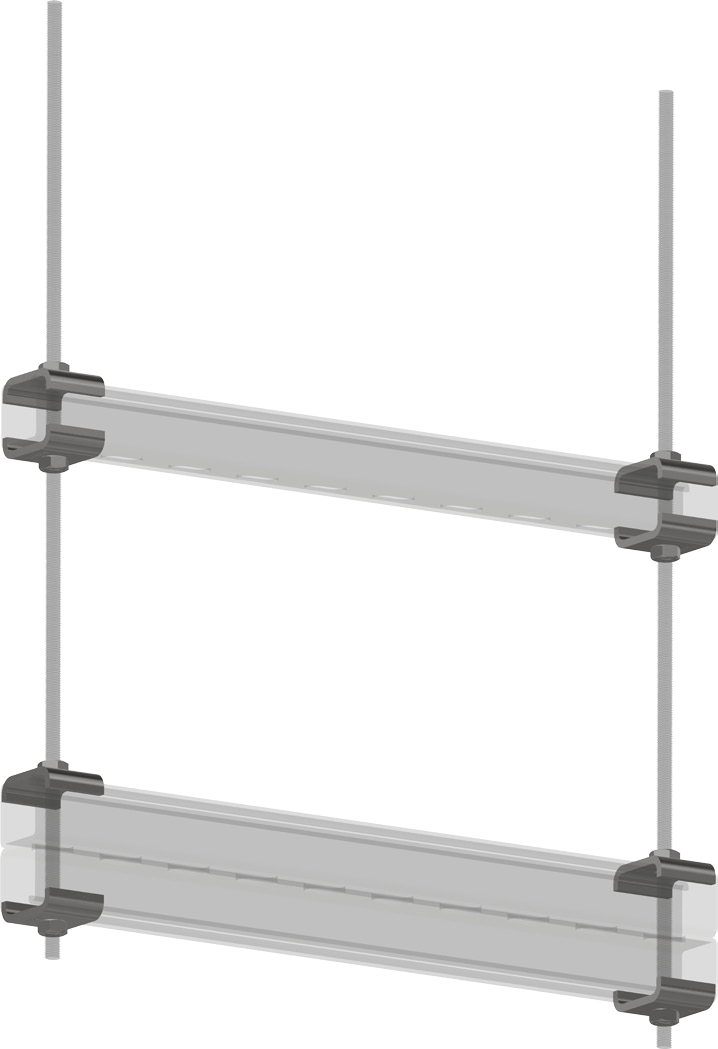
A tray, ladder or basket carries the cables. Brackets, channel, threaded rod and fixings carry that containment. Clips or ties can secure individual cables to the route. Each part has a distinct job.
If you are checking a cable route, trace it from the cable fixing through the tray, bearer, bracket, connections and rods to the building structure. The support report should cover the load path. Check the cable-fixing information separately for the intended cable and installation.
For life-safety cable routes, see BS 8519 and cable supports. To understand the standard and test-method terms used in fire support specifications, see fire standards for M&E supports.
What evidence should you ask for?
Start with the fire requirement for the service and the support type shown on the drawing. Ask for the design or test report, then check the details against the installation:
- Which support parts are included: bracket, bearer, channel, rods, connections and fixings?
- What geometry and connection positions does the report cover?
- What service arrangement and design conditions were used?
- What fire condition and duration apply?
- What assumptions apply at the building attachment?
- What should happen if the installed route or support changes?
A useful report identifies the support, the basis of the assessment and the limits that apply. If the drawing uses a different bracket, rod position or attachment, ask the designer to check it before installation. Do not assume that a similar-looking support has the same evidence.
The support should also be considered as a complete structural path. A test of one channel section is not evidence for an untested connection or fixing. Equally, evidence for a support does not establish the fire performance of the pipe, cable or containment it carries.
If the project sets a movement limit, ask whether the evidence or calculation covers deflection as well as the risk of collapse. A support may still be standing while movement affects the service or nearby components. Make the required performance clear before the support is selected, then check that the report addresses it.
When a submittal includes a product list, compare each part with the support drawing. Check the bracket, bearer, rod, connection and building fixing. Ask for a revised design detail if any part differs. This gives the site team a specific reference to install and the reviewer a clear basis for checking it.
For an enquiry, ask the designer or supplier to identify the support assembly covered by the report, the evidence route and any limits at the building connection. This is more useful than asking only whether a product is "fire rated". When a response arrives, compare the drawing and component references with the proposed installation. If the report does not show how the parts connect, ask for the missing detail before the support is ordered.
What FRS provides
FRS is a design and supply service for M&E support arrangements under fire conditions. With FRS, you receive the physical supports and a fire engineering report. MIDFIX carries design responsibility, backed by professional indemnity insurance.
The report and drawing give the project team a basis for reviewing the support before procurement and installation. Keep that information with the work. If a site change affects the geometry, connections or building attachment, refer it to the responsible designer.
During installation, check a sample of each support type against the drawing before the whole route is completed. Look at the bracket, bearer, rod positions and attachment, not just the channel section. If the support is hidden by the services or ceiling finish, make the site record while the connections can still be seen. Record the location and drawing reference with any photographs so the reviewer can identify the support later.
For an overview, see the FRS page. For the difference between a fire test and a product claim, read fire tested vs fire rated.
The short answer
Strut channel is not a universal fire-rated support. Check the evidence for the complete support you are installing, including its connections and building attachment. The report should match the fire requirement and design conditions for the service.
FAQs
Is strut channel fire rated?
There is no blanket fire rating for every support made from strut channel. Check whether the evidence covers the channel, connections, geometry and fire conditions in your installation.
Are fire-rated pipe supports a product rating?
The phrase alone does not show what was assessed. Ask for the support drawing and report, including the connections and building attachment covered.
Is fire-rated cable tray enough to specify the support?
No. The tray carries the cables, while brackets, channel, rods and fixings carry the tray. Check the evidence for the whole support and select cable fixings for their own purpose.
Does a fire test for one component cover the whole support?
No. It covers only what the report says was tested or assessed. Check the full support and the conditions stated in the evidence.
What do you receive through FRS?
You receive physical supports designed for the stated fire requirement and a fire engineering report. MIDFIX carries design responsibility, backed by professional indemnity insurance.